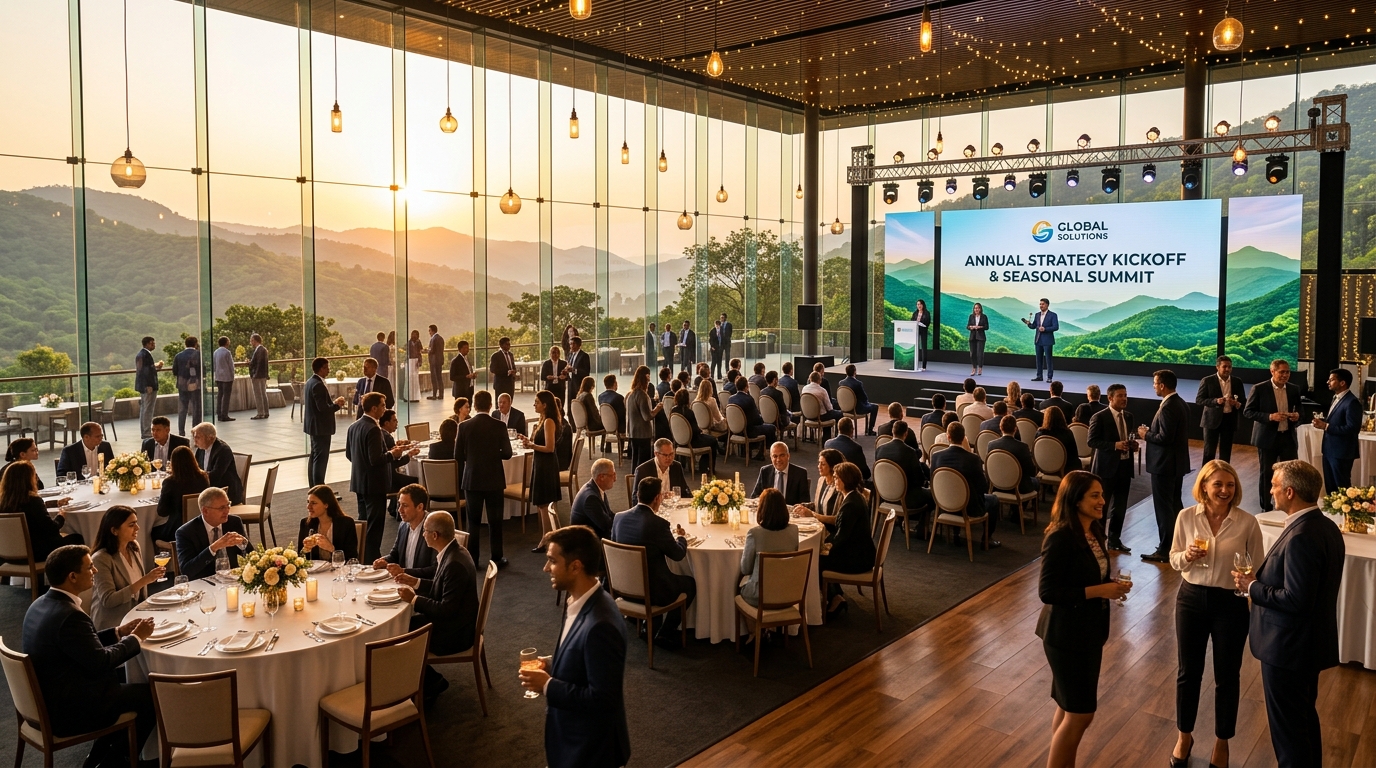
Strategic timing significantly impacts corporate event success. Maharashtra’s business calendar includes seasonal peaks, industry-specific cycles, and cultural festivals that create natural event windows. Events scheduled during peak seasons achieve 45% higher attendance rates and stronger business impact. Understanding these timing patterns helps you plan events that attract larger audiences, secure better venues, and achieve maximum business impact.
Seasonal Event Patterns in Maharashtra
October-December: Peak Season
Post-monsoon period marks Maharashtra’s busiest corporate events season. Businesses conduct annual reviews, plan next-year strategies, and host year-end celebrations. Conference venues across Mumbai, Pune, and Aurangabad see peak demand. Companies launch products before year-end retail seasons. Industry associations conduct annual conferences. Event venues in prime locations fill 3-4 months in advance. Early booking is essential for October-December events.
January-March: Planning and Strategy Season
New year brings budget confirmation, team planning, and strategic reviews. Sales kick-off conferences happen state-wide. Companies conduct mid-year reviews (for those on calendar-year cycles). Business planning retreats take advantage of pleasant weather, particularly in Nashik, Aurangabad, Mahabaleshwar, Lonavala and other such places in and around Pune. Product announcement cycles begin for summer launches. Venues have good availability.
April-June: Post-Summer Planning
Post-summer period sees renewed business activity. Companies finalize Q2 results, plan Q3 strategies, and conduct mid-year reviews. Training programs expand. Team-building events take advantage of summer months (though extreme heat in some regions). Venue availability increases in June as peak season ends, but May events still face demand. Early monsoon (late May, early June) may impact outdoor components.
July-September: Monsoon Period Challenges
Monsoon weather creates event planning challenges throughout Maharashtra. Heavy rains in coastal regions (Mumbai, parts of Aurangabad) may impact transportation and outdoor activities. However, some companies schedule training programs and internal events during this period. Venue pricing drops significantly as demand decreases, offering 15-30% savings for monsoon-season events. International participants may decline due to travel concerns. This period suits indoor, venue-based events but less so for multi-city logistics.
Industry-Specific Event Cycles
IT and Software Services: Quarterly
IT companies operate on quarterly financial cycles, creating predictable event patterns. Companies timing events with industry cycles see 35% higher decision-maker attendance. Q1 Planning Conferences (Jan-Feb) and Q4 Strategy Summits (Oct-Nov) see peak activity. Fiscal year-end conferences (March-April) coincide with financial results announcements. Bangalore and Pune host most IT events, with Mumbai capturing financial sector events.
FMCG and Retail: Seasonal and Festival-Based
FMCG companies plan events around seasonal demand cycles and festival periods. Summer product launches (Mar-Apr), monsoon promotions (Jun-Aug), and Diwali campaigns (Sep-Nov) create predictable event windows. Retail conferences and distributor meetings follow retail calendar cycles. Festival seasons (Diwali, Holi, New Year) drive consumer-focused corporate events.
Finance and Banking: Quarterly and Fiscal
Financial sector follows quarterly results cycles and fiscal year planning. Q1 Planning (Jan-Feb), Q3 Reviews (Sep-Oct), and Year-End Summits (Nov-Dec) dominate the financial calendar. Budget announcement periods (Feb) see increased business commentary events. Investment conferences cluster around Q2 results (Apr-May) and Q4 earnings (Nov-Jan).
Manufacturing: Post-Production Cycle
Manufacturing companies plan events post-production cycles and inventory management periods. Year-end reviews (Nov-Dec) and Q1 planning (Jan-Feb) are peak periods. Trade shows and equipment demonstrations follow seasonal demand for equipment purchases. Mid-year reviews (Jun-Jul) and strategic adjustments (Aug-Sep) create secondary event windows.
Festival-Based Corporate Opportunities
Diwali Period (October-November)
Diwali marks major corporate celebration season in Maharashtra. Year-end parties, dealer appreciation events, and client celebrations proliferate. “Diwali bonuses” announcements drive employee engagement events. Festival-aligned events generate 50% more employee engagement compared to non-aligned timing. Diwali discount campaigns launch in retail. Venue demand peaks during Diwali week; book 2-3 months in advance.
Holi (March) and Ganesh Chaturthi (Aug-Sept) drive cultural team-building, training retreats, and mid-year reviews with moderate to good venue availability. The peak New Year period (Dec-Jan) dominates with high-demand year-end summits, strategy sessions, and product launches, requiring planning 3–4 months in advance.
Regional Event Timing Variations
Mumbai: Year-round event activity, but peaks Oct-Dec and Dec-Jan. Monsoon (Jun-Sep) sees reduced international participation. Premium pricing Oct-Dec; moderate pricing Jul-Sep.
Pune: IT sector drives Jan-Feb and Oct-Nov peaks. Academic year cycles (May-Jun, Nov-Dec) influence training programs. College-adjacent events cluster around academic calendars. Moderate pricing year-round compared to Mumbai.
Mahabaleshwar: Premium strategy retreats and leadership summits thrive in pleasant weather (Oct–May). Heavy monsoon (Jun–Sep) limits outdoor team-building but offers scenic green backdrops. Peak season Oct–May; highly competitive monsoon discounts available.
Lonavala: High-accessibility offsites and training workshops run year-round due to excellent Mumbai-Pune connectivity. Monsoon (Jun–Sep) is popular for nature-themed retreats. Pricing features steep weekend premiums; mid-week corporate discounts widely available.
Nashik: Resort and retreat bookings follow school/corporate holiday periods. October-November and December-January peak. Summer months (Apr-Jun) see fewer retreat bookings despite pleasant wine country weather. Wedding season (Nov-Feb) competes for venue availability.
Strategic Timing Recommendations
For Maximum Visibility: Plan events during peak season (Oct-Dec) when decision-makers attend the most events and attention is highest. Expect premium pricing and require early booking. Review our Event Planning Timeline to align with 6-month advance preparation.
For Cost Optimization: Plan during shoulder seasons (Jan-Mar, Apr-May) when demand moderates but venues still function well. Pricing drops 15-30% compared to peak season while maintaining quality.
For Avoid Monsoon Impacts: Plan critical multi-city events during dry months (Oct-Apr). Avoid July-August for events dependent on participant travel.
For Industry Alignment: Schedule events aligned with your industry’s cycles: IT in Jan-Feb and Oct-Nov, Finance in Jan-Feb and Oct-Dec, FMCG around seasonal/festival periods.
For Festival Integration: Leverage Diwali (Oct-Nov) and New Year (Dec-Jan) for celebration and team-building events. Plan cultural integration 2-3 months in advance.
At Bold Marketing, we understand Maharashtra’s corporate calendar patterns and can guide you toward optimal timing for your event. Whether you’re seeking peak-season visibility, cost-effective shoulder seasons, or industry-aligned timing, we can position your event for maximum impact and efficiency. Explore our venue guide to align timing with availability across Maharashtra cities.
Ready to Plan Strategically Timed Corporate Events in Maharashtra?
Don’t leave timing to chance—align your events with Maharashtra’s business cycles for maximum impact. Ready to execute perfectly timed events? Request a free consultation today and let Bold Marketing help you select the ideal timing and season for your corporate event strategy.