In modern high-velocity corporate environments, traditional classroom lectures and dull slide presentations fail to produce lasting behavioral transformation. When employees return to their desks on Monday, 80% of passive training is forgotten within 48 hours. This is why forward-thinking enterprises in Pune, Mumbai, and Maharashtra invest in structured experiential learning. By removing teams from familiar office hierarchies and placing them in outdoor problem-solving scenarios, outbound training creates visceral, memorable lessons in leadership, psychological safety, and cross-functional communication. For venue selections, explore our curated list of Top Event Venues in Pune and our complete guide to Employee Engagement Activities.
Below is the definitive 2026 playbook on outbound training for corporate teams, detailing experiential learning frameworks, core outdoor simulations, weather-proof indoor alternatives, psychological debriefing methodologies, and safety logistics.

Quick Navigation: Outbound Training Playbook
- The Science of Experiential Learning: Why Outdoor Training Beats Classrooms
- Outbound Training for Corporate Teams: Core Outdoor Simulations
- Weather-Proof Indoor Experiential Simulations
- The Facilitator Debrief: Translating Games into Workplace ROI
- Safety, Medical and Ground Logistics Checklist
- Frequently Asked Questions (FAQ)
The Science of Experiential Learning: Why Outdoor Training Beats Classrooms
Outbound Training is built on established experiential learning cycles: Concrete Experience, Reflective Observation, Abstract Conceptualization, and Active Experimentation. When teams are faced with physical challenges—such as constructing a raft or navigating a blind obstacle course—hierarchy dissolves.
- Egalitarian Problem Solving: In the outdoors, job titles do not build rafts. Junior developers often discover natural leadership voices while senior executives practice active listening.
- Psychological Safety Under Pressure: Simulated pressure in a fun, controlled environment allows employees to make mistakes without fear of career consequences, sparking true innovation.
- Empathy and Trust Acceleration: Shared physical problem-solving builds deeper interpersonal trust in two days than six months of digital workplace chat interactions.
Outbound Training for Corporate Teams: Core Outdoor Simulations
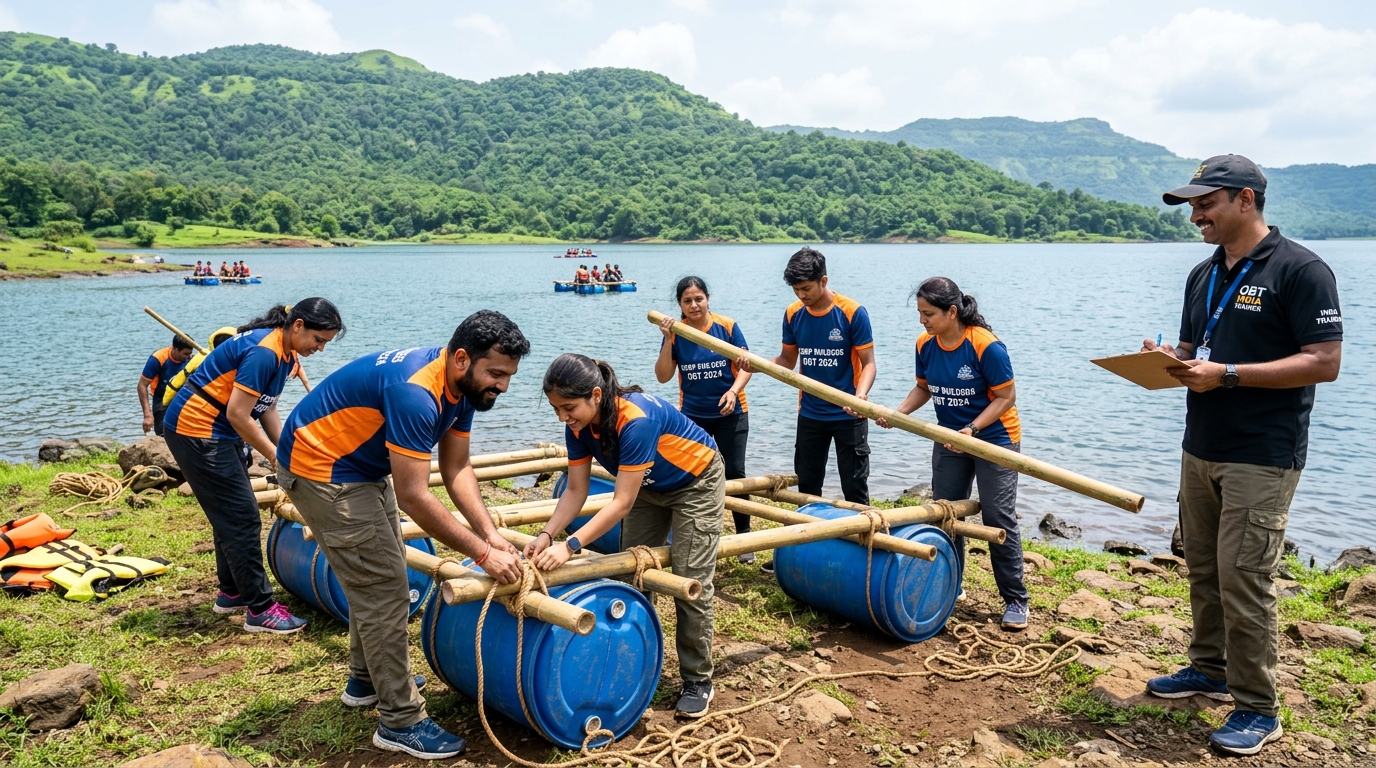
The Modular Raft Regatta
- The Challenge: Teams receive plastic barrels, bamboo poles, and nylon ropes to design, construct, and pilot a human-bearing raft across a 50-meter lake course within 45 minutes.
- The Workplace Lesson: Demonstrates resource allocation, structural delegation, and risk management under tight deadlines.
- Key Competency Built: Cross-functional collaboration and accountability—if a knot is tied carelessly, the entire team experiences the outcome.
The Blind Navigation Minefield
- The Challenge: One team member is blindfolded and must traverse an obstacle course while teammates guide them using only designated one-word directional verbal codes.
- The Workplace Lesson: Highlights how cognitive overload and ambiguous executive communication paralyze execution on the ground.
- Key Competency Built: High-trust communication, active listening, and precision briefing between leadership and operational teams.
The Tower of Babel Silent Alignment
- The Challenge: Cross-functional groups must assemble a 10-foot free-standing structure using interlocking wooden blocks without uttering a single spoken word.
- The Workplace Lesson: Tests process standardization, body language observation, and team adaptability when communication channels break down.
- Key Competency Built: Non-verbal coordination, process discipline, and intuitive team alignment.
The Human Knot and Spiders Web
- The Challenge: Teams must pass every member through an intricate web of ropes strung between trees without touching the ropes, with each opening usable only once.
- The Workplace Lesson: Emphasizes strategic sequencing, recognizing unique physical capabilities, and the necessity of mutual support.
- Key Competency Built: Resource optimization and inclusive leadership that leverages individual team member strengths.
Tactical Survival Orienteering
- The Challenge: Armed with only a topographic compass and cryptic coordinates, teams race across rugged resort terrain to recover emergency supplies before a countdown clock expires.
- The Workplace Lesson: Replicates startup pivots, competitive market pressure, and maintaining strategic direction amid imperfect data.
- Key Competency Built: Crisis decision-making, resilience, and collaborative problem-solving under time pressure.
High-Ropes Course and Belaying Leap
- The Challenge: Individual team members climb a 40-foot vertical pole and leap onto a suspended trapeze, backed by team belayers holding their safety lines on the ground.
- The Workplace Lesson: Overcoming psychological hesitation, stepping out of comfort zones, and experiencing visceral physical reliance on colleagues.
- Key Competency Built: Deep mutual trust, vulnerability, and personal courage.
Weather-Proof Indoor Experiential Simulations
During heavy monsoon months in Pune and the Western Ghats (July to September), OBT programs transition smoothly into high-impact indoor ballroom setups:
- The Portable Corporate Escape Room: Ballrooms are divided into encrypted corporate espionage vaults where cross-functional squads decrypt code puzzles, decipher physical locks, and beat a 60-minute countdown.
- The 500-Piece Unseen Mosaic: Each sub-team receives 50 pieces of an abstract painting without seeing the full picture. Only designated liaisons can negotiate color boundaries, culminating in a giant unified display of the company's vision statement.
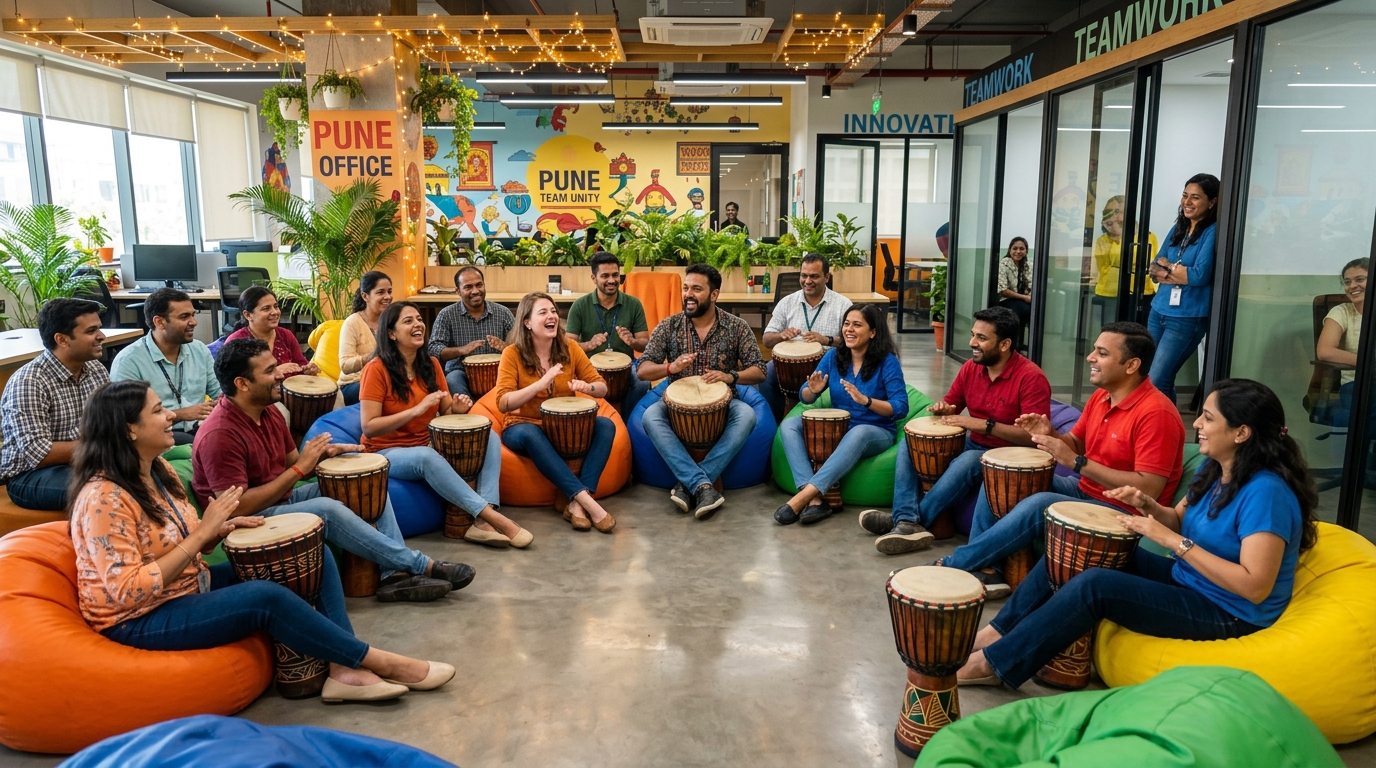
- Synchronized Corporate Drum Circles: Over 200 employees receive traditional djembe drums. Facilitators guide disparate rhythms into an awe-inspiring, synchronized percussive symphony within 45 minutes, demonstrating departmental alignment.
The Facilitator Debrief: Translating Games into Workplace ROI
An outdoor activity without a professional debrief is merely a picnic game. Certified behavioral facilitators use structured debrief frameworks to connect experiential exercises directly to daily business outcomes:
| Debrief Stage | Core Question Explored | Corporate Application |
|---|---|---|
| What Happened? | "What specific communication breakdown caused our raft to veer off course?" | Objective factual review without personal blame or defensive reactions. |
| So What? | "Where in our daily software sprints do we see this same miscommunication pattern?" | Connecting physical game dynamics directly to real-world business bottlenecks. |
| Now What? | "What specific communication protocol will our team commit to starting Monday?" | Actionable operational commitments and accountability sign-offs by team leads. |
Safety, Medical and Ground Logistics Checklist
Outdoor physical training requires rigorous duty of care. Ensure your event production partner implements these safety baselines:
- Certified Safety Gear: Harnesses, carabiners, and lifejackets must be certified by international mountaineering bodies and inspected prior to each session.
- Certified Behavioral Trainers and Mountain Guides: Ensure head facilitators hold recognized certifications in experiential education and wilderness first aid.
- On-Site Medical Standby: Every outdoor session must have a qualified first-aider, emergency medical kits, and a designated ambulance transfer plan to the nearest hospital.
- Hydration and Sunstroke Prevention: Continuous electrolyte hydration stations (ORS, tender coconut water) and scheduled shaded rest rotations.
Frequently Asked Questions (FAQ)
Q: What is the recommended group size for corporate Outbound Training?
A: While macro-sessions can accommodate up to 500 participants, the ideal team cohort size for deep behavioral coaching is 12 to 18 participants per facilitator. This ensures everyone speaks and receives personalized feedback during debriefs.
Q: Can employees with physical limitations or medical conditions participate in OBT?
A: Yes. Modern OBT utilizes the 'Challenge by Choice' philosophy. Physical roles (rowing, climbing) are paired with strategic roles (navigation, timekeeping, resource auditing), ensuring 100% inclusive participation regardless of age or fitness level.
Q: How long does a standard corporate OBT retreat last?
A: The most effective format is a 2-day, 1-night program. Day 1 focuses on building trust and breaking silos, followed by an evening celebration. Day 2 tackles high-stakes collaborative simulations and action roadmapping.
Q: Does Bold Marketing provide certified OBT facilitators and gear in Maharashtra?
A: Yes. Bold Marketing manages end-to-end OBT programs, including resort selection, luxury bus logistics, certified behavioral trainers, adventure safety equipment, and post-training impact assessments across Pune, Lonavala, Mulshi, and Alibaug.
Supercharge Your Team with Outbound Training Near Pune
Looking to break departmental silos, elevate executive leadership, and energize your workforce? Let Bold Marketing's certified experiential training team design your custom OBT offsite.